
Coding · United States
Online coding classes for kids in the US
Live Python, game design and AI classes for ages 8 to 16, with a real teacher and at most three classmates. Your child types real code from day one and builds projects they can show off.
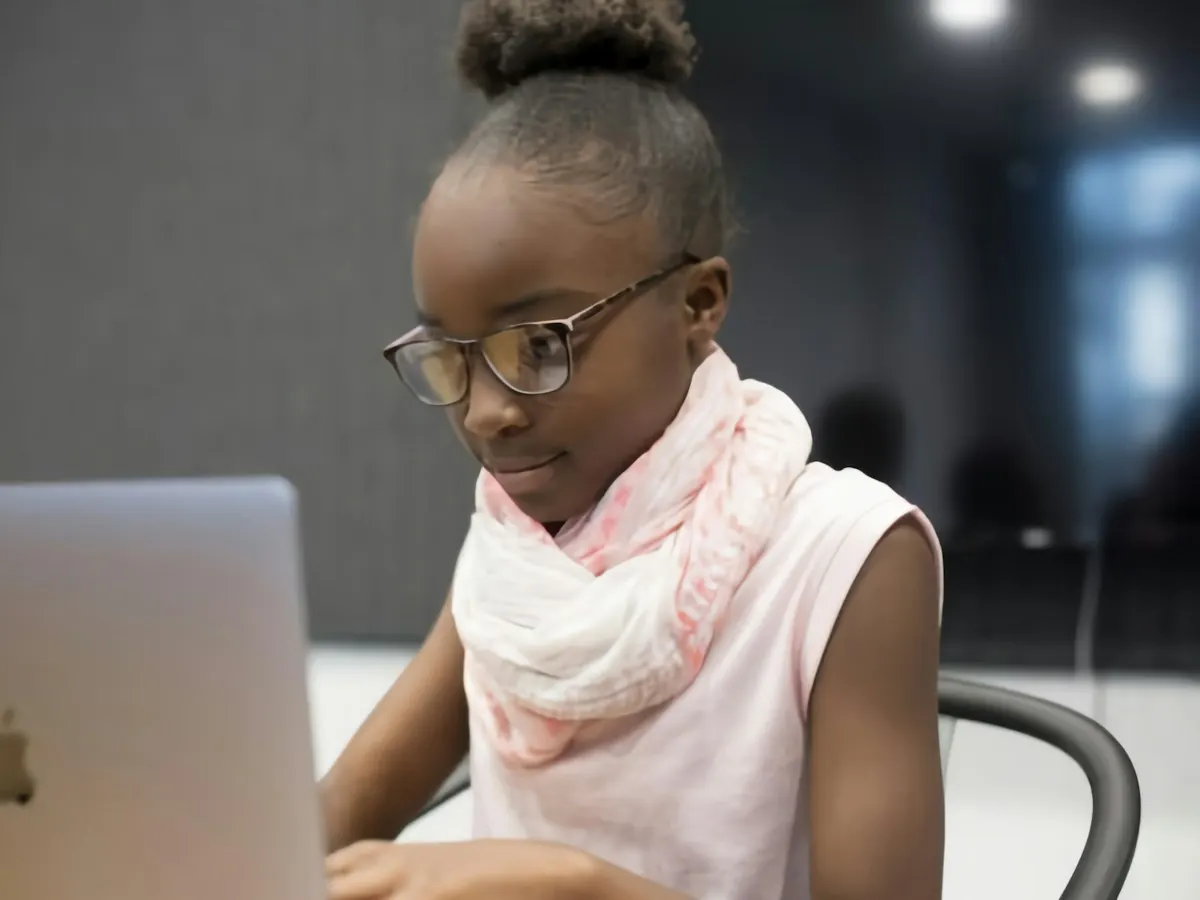
Real Python, not just blocks
Text-based code in the language used from high school computer science to industry.
Built on CS standards
Covers the algorithms, programming and data concepts in the CSTA K–12 standards.
Four learners at most
The teacher reviews every child’s code and coaches them through their own bugs.
First class $1
Once per family. Find out if your child is hooked before you book a course.
Coding beyond what school has time for
Computer science is taught unevenly across US schools. Many elementary and middle schools offer an hour of block-based coding here and there, and text-based programming often waits until high school, if it is offered at all.
Our classes give children steady, weekly practice with real Python. The concepts in the CSTA K–12 computer science standards, like algorithms, variables, loops, conditionals and working with data, are practised every lesson through projects: games, quizzes, animations and small AI experiments.
Choosing a first course
Python Beginner is ten classes for complete beginners aged 8 to 16. A child who can read and type comfortably can start here, and it teaches the ideas every later course builds on.
From there, children follow their interests. Python Game Design is sixteen classes building playable games. Python AI is sixteen classes on programs that learn from data. Python Mastery is twenty-four classes for real depth. Teenagers who like visual work can take p5.js Game Development, which teaches JavaScript through interactive graphics.
Unsure which fits? Book the $1 first class, and the teacher will recommend a course after seeing your child work.
Why four learners is the right size
Most of learning to code is learning to debug. In a large class, a child who hits an error waits for help, loses focus and decides coding is not for them. With four learners, the teacher can see each screen, ask what the child expected to happen, and guide them to the fix.
That habit of reading an error and reasoning about it is what separates a child who can follow a tutorial from one who can build something new.
What your child will build
Early lessons produce programs that respond to the user: quizzes that keep score, choose-your-own-adventure stories and simple calculators. Next come games with movement, levels and increasing difficulty, and programs that sort and summarise lists of data.
In Python AI, children build simple programs that learn from examples and talk about where AI gets things wrong. In p5.js, teenagers make interactive art and games that run in a browser and can be shared with a link. Every project is theirs to keep and show off at home or at school.
How booking works
Every class is a live, 60-minute video lesson with a real teacher. Group classes take four learners at most, and the booking system will not sell a fifth seat. If you would rather your child had the teacher to themselves, every maths and coding course is also available one to one.
A group class is $11 and a one-to-one class is $16, priced per class. You can pay class by class or book the whole course. Your family’s very first class costs $1, once per family, so you can see the teacher and the format before committing to anything.
Class times are shown in your own time zone when you book. If something comes up, you can move or cancel a class up to 24 hours before it starts. There is no subscription, so nothing renews in the background, and you are welcome to sit in on any lesson.
Classes to start with
Live, 60 minutes, four learners at most or 1-on-1.
Questions parents ask
FAQ
What age is best to start coding?
Our courses are for ages 8 to 16. Once a child can read and type comfortably, they are ready for Python Beginner.
Is it Scratch or real code?
Real code. Children type Python from the first lesson. If your child is younger and not yet typing, our Scratch vs Python guide explains when blocks make more sense.
What time zone are classes in?
Class times are shown in your own time zone when you book, from Eastern to Pacific.
How much do coding classes cost?
A group class of up to four learners is $11 and a one-to-one class is $16, priced per class. Your family’s first class is $1.
What equipment is needed?
A laptop or computer with a webcam. Coding needs a keyboard and a full-size screen.
Further reading
Try one class for $1
Once per family. Meet the teacher, see the format, and sit in if you like, before you book anything more.