
Parent guide · 7 min read
Maths Olympiad Australia: how to prepare your child
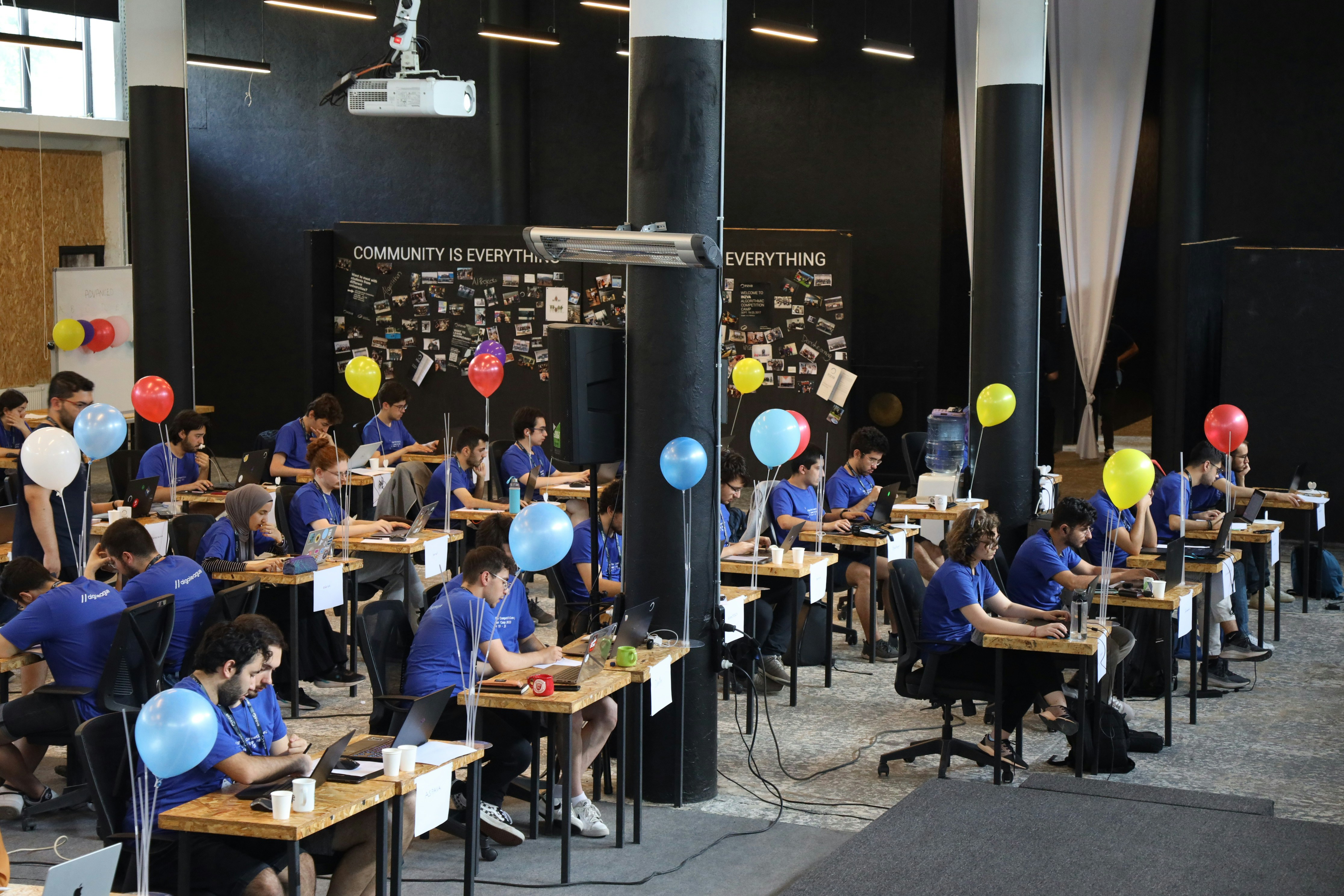
Australia has a well-developed pathway of maths competitions for school students, from introductory problem-solving contests in primary school all the way to international olympiad selection. The names — AMC, APSMO, AMT — circulate among parents without always being explained clearly. This guide covers the main competitions, what they test, which year levels each suits, and practical steps a parent can take at home to help.
Try this tonight
5 things you can do at home
Identify which competition your child is eligible for
The AMC runs annually in August and is open to all students from Year 3 to Year 12, with separate papers for different year bands. APSMO runs five olympiad tests per year for primary (Years 5–6) and junior secondary (Years 7–8) students. AMT also runs the IMAS and other competitions for Years 9–12. Check each organisation’s website for current year-level cutoffs, since they can vary.
Work through past papers together, one problem at a time
Past AMC and APSMO papers are available from each organisation. Start with problems from two years below the target year level to build confidence, then move up. The key habit is to read each problem twice, draw a diagram where possible, and write the reasoning in full rather than jumping to an answer.
Focus on problem types your child finds hardest
Competition problems cluster around a few repeating types: counting and combinatorics, number patterns, geometry, and working backwards from an answer. Identify which type produces the most hesitation and spend a week on that type specifically, using multiple problems from the same category rather than mixing types.
Build the habit of checking the answer makes sense
Many competition mistakes are correct reasoning applied to a misread problem. After every solution, ask: does this answer make sense given the original question? A count that is larger than the total number of things, or a length that is longer than the whole figure, should trigger a re-read of the problem rather than submission of that answer.
Set aside 20 minutes twice a week rather than one long session
Short, regular practice builds the retrieval habit better than a single long preparation session. A child who has thought through two or three competition problems per session, explained their reasoning aloud, and checked their answers consistently is better prepared than one who completed many problems the night before.
The main Australian maths competitions explained
The Australian Mathematics Competition (AMC), run by the Australian Mathematics Trust (AMT), is the entry point for most students. It runs once a year in August and is a multiple-choice and short-answer paper taken at school. Year 3–4 students sit the Primary paper, Years 5–6 sit the Upper Primary, Years 7–8 sit the Junior, Years 9–10 the Intermediate, and Years 11–12 the Senior. Results are reported as Participation, Proficiency, Credit, Distinction, High Distinction and Prize.
APSMO (Australasian Problem Solving Mathematical Olympiads) runs differently: five olympiad tests spread across the school year, each with five problems, for Primary (Years 5–6) and Division J (Years 7–8). The focus is on extended reasoning rather than speed, and results go to the school rather than being externally ranked. For stronger students, AMT also runs the Australian Intermediate Mathematics Olympiad (AIMO), the Australian Mathematical Olympiad (AMO), and the selection process for the International Mathematical Olympiad (IMO) team.
What competition maths tests that school maths does not
School maths rewards applying a known procedure to a standard problem. Competition maths rewards finding a procedure for a problem you have not seen before. A student who has memorised every formula in the curriculum may still find competition problems hard, because the skill being tested is flexible reasoning — recognising which approach to try, and why it is the right one for this specific problem.
The good news is that the underlying content is not beyond the curriculum. AMC Primary problems use arithmetic and simple geometry. APSMO Junior problems use algebra and number theory at the Year 7–8 level. The difference is in how the content is applied, not in what is assumed. A student with solid Year 7 foundations is not held back by content gaps; they are held back by unfamiliarity with non-routine problems.
A worked example: a counting problem from a past AMC paper
Problem: how many two-digit numbers have digits that add to 9? The standard approach is to list possibilities systematically: 18, 27, 36, 45, 54, 63, 72, 81, 90 — that is 9 numbers. The competition skill is not the arithmetic but the method: write a systematic list, check that every case is covered, and confirm the boundary cases (90 qualifies; 09 is not a two-digit number).
That same approach — systematic listing, checking boundaries — appears in dozens of AMC and APSMO problems with different surface content. A student who has practised recognising when to list systematically, and how to do it without missing cases, can apply the method to problems they have never seen before. That is the difference between curriculum preparation and competition preparation.
What year level to start, and what to expect
Most students enter the AMC for the first time in Year 5 or 6 through their school. Schools register as a group, and the entry fee is paid by the school or by families depending on the school’s arrangement. A first attempt at Year 5 with little preparation is normal — the purpose is exposure as much as score. Consistent, low-pressure preparation over two or three years typically produces a larger improvement than intense preparation before one sitting.
APSMO is worth considering separately from the AMC because it is structured as ongoing practice rather than a single annual test. The five tests spread through the year provide a training schedule rather than a performance pressure, which suits students who find the idea of a single high-stakes sitting discouraging.
Signs it’s time for outside help
When home help has done what it can
- Your child finishes school maths easily but has never tried a non-routine problem.
- They give up quickly when a problem doesn’t have an obvious first step.
- They get the right answer without being able to explain how they got there.
- They have entered the AMC or APSMO once and want to improve their result next year.
- They ask why a maths rule works, not just how to apply it.
Questions parents ask
FAQ
What is the AMC in Australia?
The Australian Mathematics Competition, run by the Australian Mathematics Trust. It is an annual multiple-choice and short-answer paper taken at school, open to students from Year 3 to Year 12, with separate papers for different year bands.
What is APSMO?
Australasian Problem Solving Mathematical Olympiads. APSMO runs five olympiad tests during the school year for Primary (Years 5–6) and Junior Secondary (Years 7–8) students, with an emphasis on extended reasoning rather than speed.
How do I register my child for maths olympiad competitions?
Most students enter through their school. Contact your child’s school to ask whether they register for the AMC or APSMO. If the school does not register, families can sometimes enter independently — check each organisation’s website for current registration details.
At what age or year level should preparation start?
There is no fixed answer. Many students first enter the AMC in Year 5 or 6 with little preparation, as exposure. Consistent practice from Year 5 or 6 through to Year 8 produces stronger results than a single period of intense preparation.
Is maths olympiad preparation the same as school maths tutoring?
No. School tutoring focuses on curriculum content and exam technique. Olympiad preparation focuses on non-routine problems, reasoning strategies and systematic methods. A student who is already strong at school maths may still benefit from competition-specific practice.
Further reading
Classes that fit
Live, 50–55 minutes, four learners at most or 1-on-1.
Not sure which is right for your child?
Tell us their age and what they have tried so far, and we will suggest where to start before you book anything.