
Parent guide · 6 min read
HSC maths help: formula sheets, past papers and how to study
The HSC maths exams in NSW carry real weight: they feed directly into the ATAR and, for many students, shape which university courses are open. Yet the exam itself tests a fairly predictable set of skills, and most marks lost are not on the hardest questions but on algebra slips, misread formula-sheet entries and poor time splits. This guide covers how the HSC maths subjects work, how to study for them, and the specific habits that separate students who improve from those who repeat the same errors.
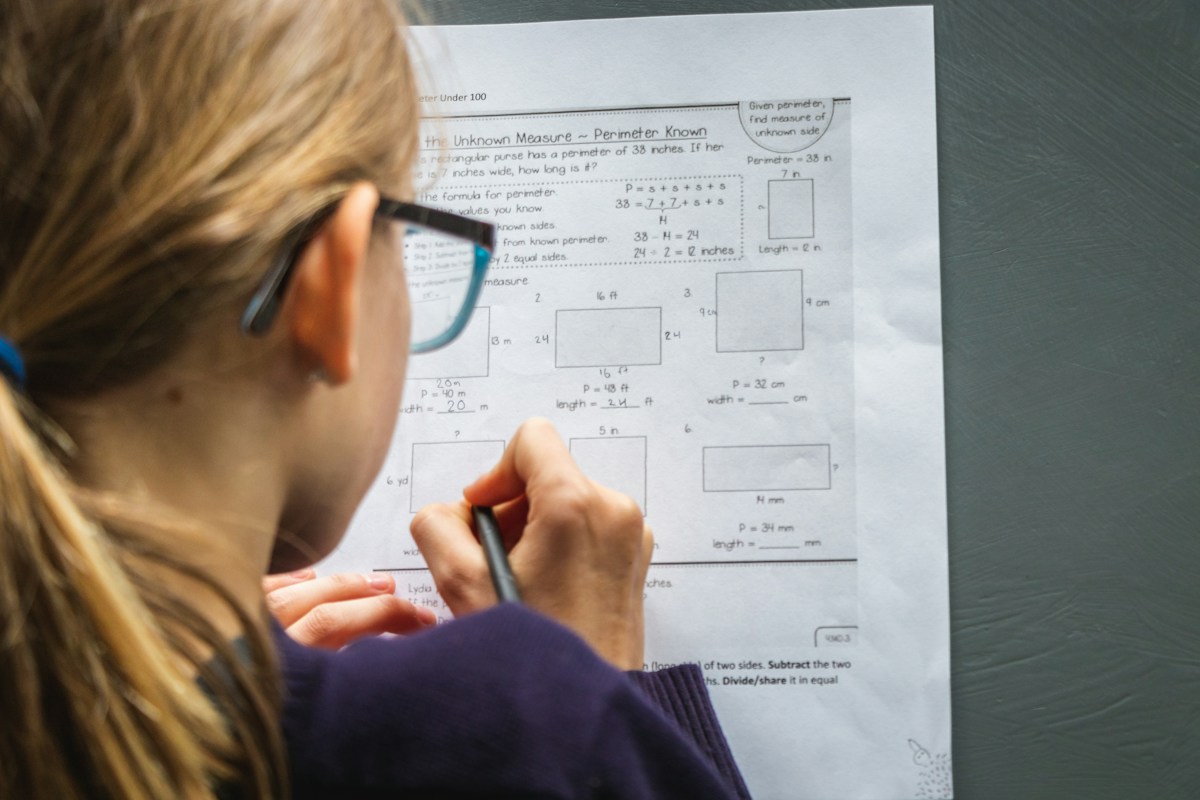
Try this tonight
4 things you can do at home
Do one past paper under timed conditions this week
Set a timer for the real exam length, use only the official formula sheet, and write on paper. When the timer stops, stop. Mark it against the marking guidelines from the NESA website. The point is not the mark itself but seeing which questions ran over time and which were left blank.
Sort errors into three piles
Go through every lost mark and label it: "did not know the method", "knew the method but made an algebra or arithmetic slip", or "ran out of time". Most students find slips and time are bigger than content gaps. That changes where to spend the next study session.
Practise with the formula sheet open, not from memory
The formula sheet is provided in the exam, so know what is on it and where. Practise looking up each formula, substituting values and simplifying. A student who has never used the sheet under pressure will waste time searching for entries they could have found in seconds.
Rework one multi-part question from scratch each evening
Pick a question that was marked wrong, cover the solution, and redo it on a fresh page. Multi-part HSC questions build: an error in part (a) cascades through (b) and (c). Practising the full chain, including checking each part before moving on, is more useful than drilling isolated skills.
How the HSC maths subjects work
NSW offers several Stage 6 mathematics courses. Mathematics Standard (1 and 2) focuses on practical applications: measurement, financial maths, statistics and networks. Mathematics Advanced covers functions, calculus, trigonometric identities and statistical analysis. Mathematics Extension 1 and Extension 2 go further into proof, complex numbers and harder calculus.
Each course has its own exam, its own formula sheet and its own marking guidelines. Which course a student sits usually depends on their Year 10 results and the school. The study approach is the same across all of them: learn the syllabus dot points, practise with past papers, and close the gaps that cost marks.
A worked example: using the formula sheet under pressure
A Standard 2 question asks for the future value of an annuity: $200 deposited monthly at 6% p.a. compounded monthly for 5 years. The formula sheet gives FV = a × ((1 + r)^n − 1) / r. The student needs r = 0.06 / 12 = 0.005 and n = 60, then substitutes: FV = 200 × ((1.005)^60 − 1) / 0.005.
The common errors are using r = 0.06 instead of the monthly rate, or forgetting to convert the term to months. Both come from not reading the formula sheet carefully enough. A student who has practised substituting into this formula three or four times before the exam catches the unit mismatch automatically.
Why algebra gaps from earlier years cost the most marks
HSC questions assume that factorising, expanding, solving equations and manipulating fractions are automatic. A student who hesitates on these spends time and attention on mechanics instead of the new idea the question is testing. In a timed exam, that means fewer questions attempted.
The fix is not to go back and redo all of Year 9 and 10 algebra. It is to notice which specific operation keeps going wrong in past papers, such as sign errors when expanding brackets or losing a denominator when combining fractions, and do ten minutes of focused practice on that operation until it is reliable.
Building a study routine that actually works
Rereading notes feels productive but rarely moves the mark. Active study means doing questions, marking them, and spending the next session on the weakest area. A short daily session of 30 to 40 minutes on one topic, with a full timed paper once a week, usually produces better results than long weekend cramming sessions.
Keep a running list of error types. If "forgot to check the domain" appears three times, that is the next thing to practise. The list makes progress visible and stops study sessions from drifting to topics that already feel comfortable.
Signs it’s time for outside help
When home help has done what it can
- Loses marks on early parts of multi-part questions, not just the hard final parts.
- Has never done a full past paper under timed conditions.
- Cannot find a formula on the reference sheet without searching for a long time.
- Makes the same algebra slip, such as a sign error, in paper after paper.
- Studies by rereading notes but rarely does practice questions.
- Says the exam is "impossible" but has not analysed which question types cost the most marks.
Questions parents ask
FAQ
What HSC maths subjects are available in NSW?
Mathematics Standard 1 and 2, Mathematics Advanced, Mathematics Extension 1 and Mathematics Extension 2. The choice depends on Year 10 results, the school and the student’s intended university course.
Is a formula sheet provided in the HSC maths exam?
Yes. Each HSC maths course has its own official formula sheet, provided in the exam. Practising with it open is essential so the layout is familiar under timed conditions.
How should my child study for HSC maths?
Do timed past papers, mark them against the NESA guidelines, sort errors into content gaps, algebra slips and time problems, and spend each study session on the most common error type. Short daily sessions work better than long weekend cramming.
When should HSC maths revision start?
Year 11 content feeds directly into Year 12. Starting regular past-paper practice in Year 11, even briefly, builds the timed-exam habit early. Intensive revision usually begins a few months before the trial exams.
Further reading
Classes that fit
Live, 50–55 minutes, four learners at most or 1-on-1.
Not sure which is right for your child?
Tell us their age and what they have tried so far, and we will suggest where to start before you book anything.