
Parent guide · 5 min read
What age should a child start Python?
Parents usually ask this as a number: is 8 too young, is 12 too late? Python does not have a minimum age written into it anywhere — it has a minimum level of reading and typing, and children reach that at different ages. Here is how to check where your own child stands, rather than go by a guideline that was never written for them specifically.
Try this tonight
4 things you can do at home
Check typing, not just age
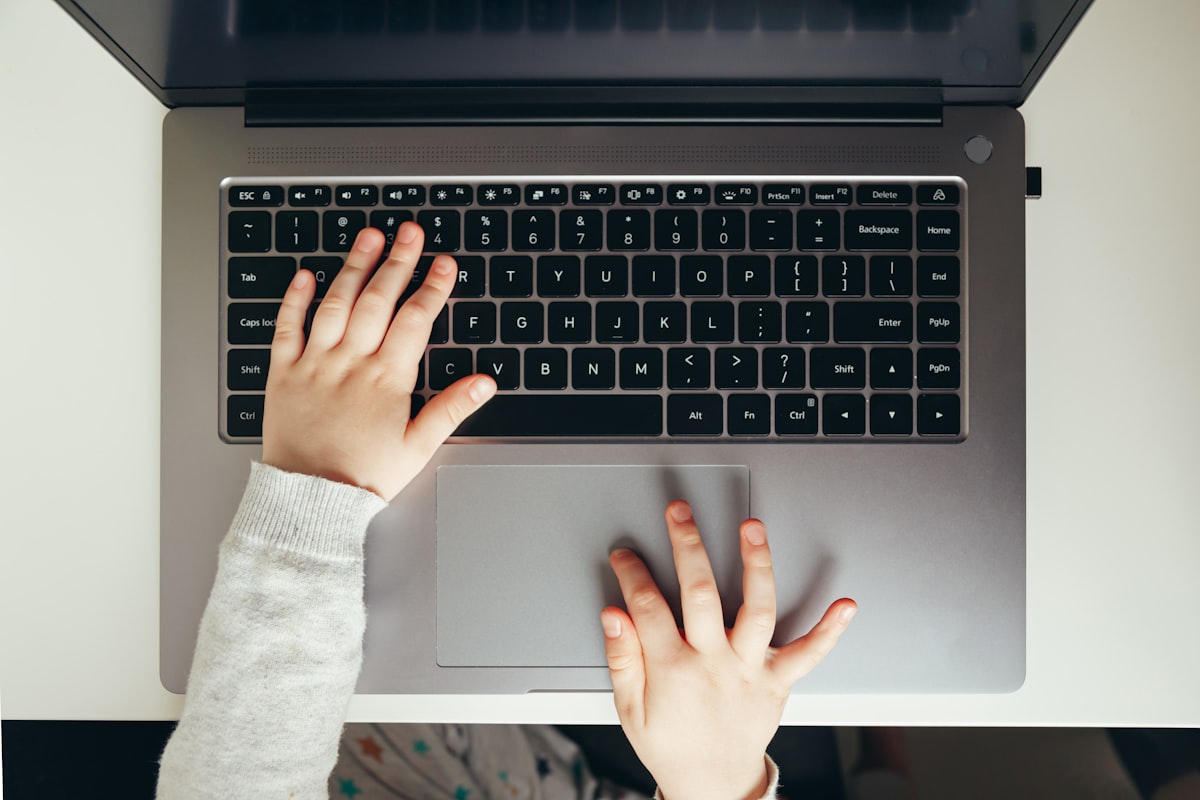
Have your child type "print hello" on a keyboard. If they can find the letters without hunting for more than a few seconds each, typing will not slow them down in a Python class.
Check reading of instructions, not vocabulary
Read a short set of written instructions together and ask your child to follow them one at a time. Python lessons are read as much as they are watched, so this matters more than knowing computer terms in advance.
Try a five-minute free Python playground
A free browser-based Python editor lets you type one line, like `print("hi")`, and see it run. Watching how your child reacts to a typo — frustrated and stuck, or curious about the error — tells you a lot before committing to a course.
Ask if they already use Scratch
A child who has used Scratch, even a little, already understands loops, conditions and events. That experience transfers directly, and is often a stronger readiness signal than age or grade.
Why "age 10" gets repeated as a rule of thumb
Ten is a common answer because by then most children reliably type without hunting for keys and read multi-step instructions unaided — the two real prerequisites for Python. It is a useful average, not a threshold: plenty of 8-year-olds clear both checks, and plenty of 11-year-olds have not yet, usually because they have had less keyboard time rather than because of anything about their age.
Treating ten as a hard rule causes two mistakes in both directions: holding back a ready 8-year-old on a block-based tool they have outgrown, and starting an unready 11-year-old on Python where every lesson turns into a typing struggle instead of a coding one.
What actually happens if you start too early
It is rarely that the ideas are too hard. Variables and loops are graspable well before ten. The real friction is mechanical: a child who cannot yet type "for i in range(10):" without several corrections spends the lesson fighting the keyboard, and the actual idea being taught gets lost underneath that struggle.
That is different from a child who types slowly but accurately. Slow typing is fine — a Python class is not timed. Hunting-and-pecking with frequent errors, especially on symbols like colons and parentheses, is the pattern that turns a coding lesson into a typing lesson.
A worked example: the two-minute typo test
Type `print("Hello"` on a shared screen — missing the closing bracket on purpose — and run it. Python will show an error mentioning the missing parenthesis. Ask your child to read the error and guess what is wrong before you explain it.
A child who is ready usually says something like "it needs another bracket" within a minute, even if they cannot name the error type. A child who is not quite ready either cannot locate what looks wrong, or gives up reading the error and asks you to just fix it. Neither reaction is a bad sign at a young age — it is simply information about whether this is the right week to start.
If they are not ready yet
Scratch, which is free, is the sensible next step rather than a consolation prize. It teaches the same core ideas — sequence, loops, conditions, events — without the typing and reading load, and time spent there is not wasted once a child does move to Python: the concepts carry over directly and the transition is usually quick.
There is no cost to waiting a term or two and re-running the checks above. The two skills that matter, typing and reading instructions, develop with ordinary schoolwork regardless of whether a child is coding, so a "not yet" now is rarely a "not yet" for long.
Signs it’s time for outside help
When home help has done what it can
- Your child reads and reacts to on-screen error messages instead of freezing at them.
- They can type a full sentence without asking where a key is.
- They have already used Scratch or a similar block tool and want something that "does more".
- They stay with a small stuck problem for a few minutes before asking for help.
- They ask what a website or game is "made of" — genuine curiosity about how it works.
Questions parents ask
FAQ
Is 8 too young to start Python?
Not necessarily. Some 8-year-olds who type and read confidently do well starting Python directly. Others do better with Scratch first. The two-question check above is a better guide than the age alone.
Should my child learn Scratch before Python?
Only if they need it. Scratch is genuinely useful for a child who cannot yet type or read fluently, but a confident reader and typer who goes straight to Python is not skipping a required step.
How do I know if my child is bored rather than struggling?
Boredom looks like finishing fast and asking for more; struggling looks like slowing down on the same kind of step repeatedly. If it’s boredom, the block-based version of the same idea is usually the problem, not your child.
Can a teenager start Python for the first time?
Yes, easily. Teenagers who have never coded typically move through the beginner material faster than younger children, because reading and typing are already fluent.
Classes that fit
Live, 60 minutes, four learners at most or 1-on-1.
Not sure which is right for your child?
Tell us their age and what they have tried so far, and we will suggest where to start before you book anything.