
Parent guide · 6 min read
Volume of a cylinder for kids: base area times height, and the radius trap
The volume of a cylinder is the amount of space inside a can, a pipe or a drinking glass with straight sides. The formula, V = πr²h, looks like a lot of symbols at once, which is why many children memorise it without knowing what it means and then use the wrong number for the radius. This guide shows where the formula comes from, three worked examples and the one slip that causes most wrong answers.
Try this tonight
4 things you can do at home
Stack something round
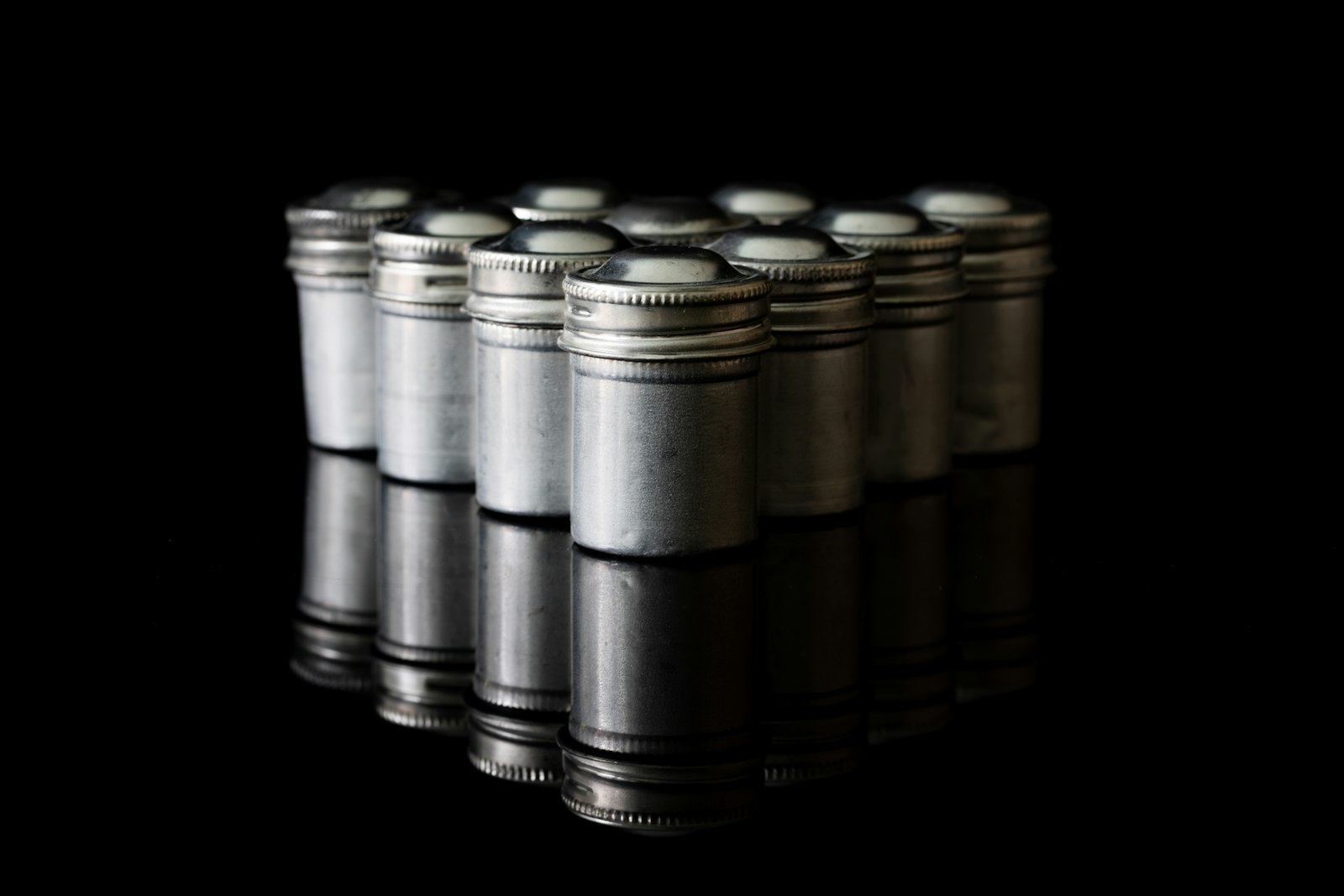
Pile up coins, or look at a roll of coins or a stack of paper cups of the same size. Each coin is a thin circle, and the whole stack is a cylinder. A child who sees that the volume is "one circle, repeated for the whole height" has already understood the formula.
Find the base area first, on its own line
Write "base area = π × r × r" and work it out before touching the height. The radius is squared, which means multiplied by itself, not doubled. Keeping this on a separate line stops the common slip of doing r × 2 instead of r × r.
Check radius or diameter before anything else
Ask "is the number given the distance all the way across, or from the centre to the edge?" If it goes all the way across it is the diameter, so halve it. A child who makes this a habit before every question avoids the most common wrong answer.
Multiply by the height and attach cubic units
Multiply the base area by the height and write the unit with a small 3, such as cm³. A real can makes a good check: a standard can of soup holds roughly 400 mL, and 1 cm³ is the same as 1 mL, so an answer of 4 cm³ or 4,000 cm³ for a soup can is a signal to look again.
Why the formula is base area times height
The volume of a box is the area of its base multiplied by its height, because the box is the base repeated layer by layer. A cylinder works the same way, but its base is a circle. The area of a circle is π × r², so the volume of a cylinder is π × r² × h.
This is why the formula is not something new to learn for children who already know the volume of a rectangular prism and the area of a circle. It is the same idea, "base times height", with a different base. If your child forgets the formula, they can rebuild it from those two facts.
A worked example: radius given
A cylinder has a radius of 3 cm and a height of 10 cm. The base area is π × 3 × 3 = 9π cm². Multiplying by the height gives 9π × 10 = 90π cm³. As a number, 90 × 3.14159 is about 282.7 cm³ (using 3.14 for π gives 282.6, so check which value the class uses).
Leaving the answer as 90π is also correct and is exact. Some questions ask for the answer "in terms of π", and a child who is comfortable with both forms is not thrown by either.
A worked example: diameter given, the usual trap
A tin is 7 cm across and 10 cm tall. The 7 cm is the diameter, so the radius is 3.5 cm. The base area is π × 3.5 × 3.5 = 12.25π cm², and the volume is 12.25π × 10 = 122.5π, which is about 384.8 cm³. Since 1 cm³ is 1 mL, the tin holds about 385 mL, a sensible size for a tin.
If the child had used 7 as the radius, the answer would be 490π, about 1,539 cm³ or more than a litre and a half. That is four times too large, because squaring a number that is twice too big makes the answer four times too big. Checking that the answer is a sensible size for a real tin is the quickest way to catch this.
A worked example: working backwards, and what doubling does
A cylinder with a height of 8 cm has a volume of 200π cm³. To find the radius, divide the volume by the height first: 200π ÷ 8 = 25π. This is π × r², so r² = 25 and r = 5 cm. Working backwards in two clear steps is easier than trying to rearrange the whole formula at once.
Doubling also behaves differently for the two measurements. A cylinder with r = 2 cm and h = 5 cm has a volume of 20π, about 62.8 cm³. Doubling the height to 10 cm doubles the volume to 40π. Doubling the radius to 4 cm makes it 80π, about 251.3 cm³, four times as much, because the radius is squared. This is why a small change in the radius matters more than the same change in the height.
Signs it’s time for outside help
When home help has done what it can
- Uses the diameter in place of the radius, or the radius doubled in place of squared.
- Remembers π × r × h or 2 × π × r × h, mixing the volume with another cylinder formula.
- Writes a volume in square units, or an answer that is far too large or small for a real can.
- Can find the area of a circle but not use it as the base of a solid.
- Cannot work backwards from a volume to the radius.
- Is confident with the volume of a box but stalls as soon as the base is a circle.
Questions parents ask
FAQ
What grade do children learn the volume of a cylinder?
In the US Common Core, the volume of cylinders, cones and spheres is part of Grade 8 geometry (ages 13–14). The Australian Curriculum covers the volume of prisms and cylinders in the middle years of secondary school.
What is the formula for the volume of a cylinder?
V = π × r² × h, where r is the radius of the circular base and h is the height. It is the area of the base multiplied by the height.
What if I am given the diameter?
Halve it to get the radius before using the formula. A tin that is 7 cm across has a radius of 3.5 cm.
Should the answer use 3.14 or the π button?
Follow the question or the teacher: some ask for an answer in terms of π, some for 3.14, and some for the calculator’s π key. The answers will differ slightly in the last digit, so check which one the class uses.
How is it different from surface area?
Volume is the space inside, in cubic units. Surface area is the total area of the outside, in square units, and uses a different formula.
Further reading
Classes that fit
Live, 50–60 minutes, four learners at most or 1-on-1.

Not sure which is right for your child?
Tell us their age and what they have tried so far, and we will suggest where to start before you book anything.