
Parent guide · 5 min read
Types of triangles for kids: sorting scalene, isosceles and equilateral
Triangles are sorted in two different ways, and children get into trouble when the two are mixed together. One way looks at the sides (are they equal or not?) and gives scalene, isosceles and equilateral. The other looks at the biggest angle and gives acute, right and obtuse. Every triangle gets one name from each list, such as "right scalene" or "acute isosceles".
Try this tonight
4 things you can do at home
Cut and sort real triangles
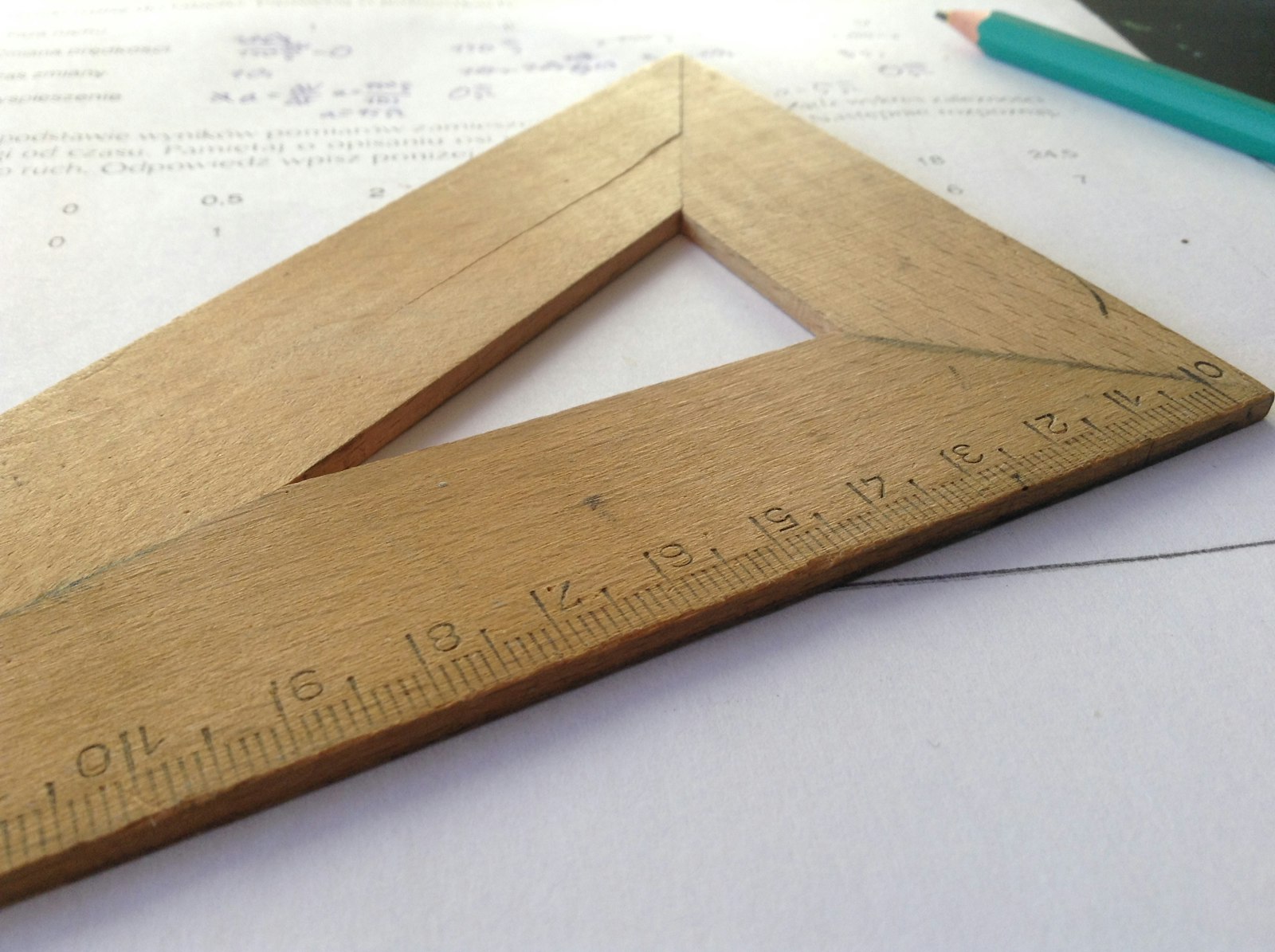
Draw or cut out eight triangles of different shapes on paper. Ask your child to sort them into piles by sides first: all equal, two equal, none equal. Then shuffle and re-sort the same triangles by angles. Seeing one triangle land in two different piles is the "aha".
Use the corner of a piece of paper as a right-angle checker
Fold a sheet twice to make a square corner. Slide it into each angle of a triangle: it fits exactly for a right angle, leaves a gap for an acute one and will not fit for an obtuse one.
Match sides with tick marks
On any drawing, tick the sides that are equal, one tick on one pair, two ticks on another. Equal tick marks are the language of the diagram, and children who learn to read them stop guessing from how a triangle "looks".
Ask the "can it exist?" question
Give three lengths, such as 3, 4 and 8, and ask whether a triangle can be built. Two short sides have to reach past the length of the long one: 3 + 4 = 7 is less than 8, so it cannot. A string, a ruler or three straws make this obvious.
The two ways of naming a triangle
By sides. Equilateral means three equal sides, and its three angles are all 60°. Isosceles means two equal sides, with the two angles opposite those sides also equal. Scalene means all three sides different lengths, and all three angles different too.
By angles. The angles of any triangle add up to 180°. If all three are under 90° it is acute; if one is exactly 90° it is right; if one is over 90° it is obtuse. A triangle can have only one right angle or one obtuse angle, because there would be no room left for the other two.
A worked example: three triangles, two names each
Triangle A has sides 5 cm, 5 cm and 8 cm. Two sides are equal, so it is isosceles. Its angles are 37°, 37° and 106°, so the biggest is over 90° and it is obtuse. Full name: obtuse isosceles.
Triangle B has sides 3 cm, 4 cm and 5 cm. No two are equal, so it is scalene. It has a right angle between the 3 and the 4, so it is right. Full name: right scalene. Triangle C has sides 6 cm, 6 cm and 6 cm and angles 60°, 60°, 60°. It is equilateral and, since every angle is under 90°, acute.
The traps: looks-based sorting, and the equilateral question
Judging by how the triangle looks. A drawing that is not to scale may look isosceles when the numbers say scalene, so children should trust marked sides and given measurements over the picture, and say "marked equal" rather than "looks equal".
Is an equilateral triangle also isosceles? In the definition "at least two equal sides", yes; in the definition "exactly two", no. Schools and textbooks differ, so it is worth checking which one your child's class uses, and staying consistent with it.
Mixing the two lists. "Right" is not a side type and "scalene" is not an angle type. A useful test: if the word is about equal lengths, it is about sides; if it is about the size of a corner, it is about angles.
Signs it’s time for outside help
When home help has done what it can
- Cannot name a triangle without looking at a chart.
- Uses "right" or "acute" when asked about sides, and "scalene" when asked about angles.
- Decides a triangle is isosceles because it looks it, without checking marks or measurements.
- Does not know that a triangle's angles add up to 180°.
- Struggles to measure an angle with a protractor or to spot a right angle.
Questions parents ask
FAQ
What age do children learn the types of triangles?
Most children meet triangles by name around ages 6–8, and classify them by sides and angles around ages 9–11 (US Grades 4–5, England Key Stage 2, Australian Years 4–5).
Can a triangle have two right angles?
No. Two right angles already add up to 180°, leaving nothing for the third angle. A triangle has at most one right angle, and at most one obtuse angle.
Is a right triangle always scalene?
No. A right triangle can also be isosceles, with angles of 45°, 45° and 90°. That is why "right" and "isosceles" are two different questions: one about angles, one about sides.
How can my child remember scalene, isosceles and equilateral?
Equilateral contains "equal" and "lateral" (sides), so all sides are equal. Isosceles has two equal sides, like two legs on a stool. Scalene is left over: all different. Sorting a page of real triangles is worth more than any memory trick.
Further reading
Classes that fit
Live, 60 minutes, four learners at most or 1-on-1.
Not sure which is right for your child?
Tell us their age and what they have tried so far, and we will suggest where to start before you book anything.