
Parent guide · 5 min read
Area of a triangle for kids: why it is half of a rectangle
The area of a triangle is one of the first formulas children meet that they are asked to use, not just count. Most of them learn "base times height divided by two" as a chant and then lose marks because they multiply by the wrong side or forget the half. This guide shows where the formula comes from, so it can be rebuilt from memory, and then works through the three kinds of triangle that cause the most trouble.
Try this tonight
4 things you can do at home
Cut a rectangle in half
Draw a rectangle, then draw a line from one corner to the opposite corner. Cut along it. Two identical right triangles fall out, each exactly half the rectangle. A child who has done this once usually remembers where the "÷ 2" comes from.
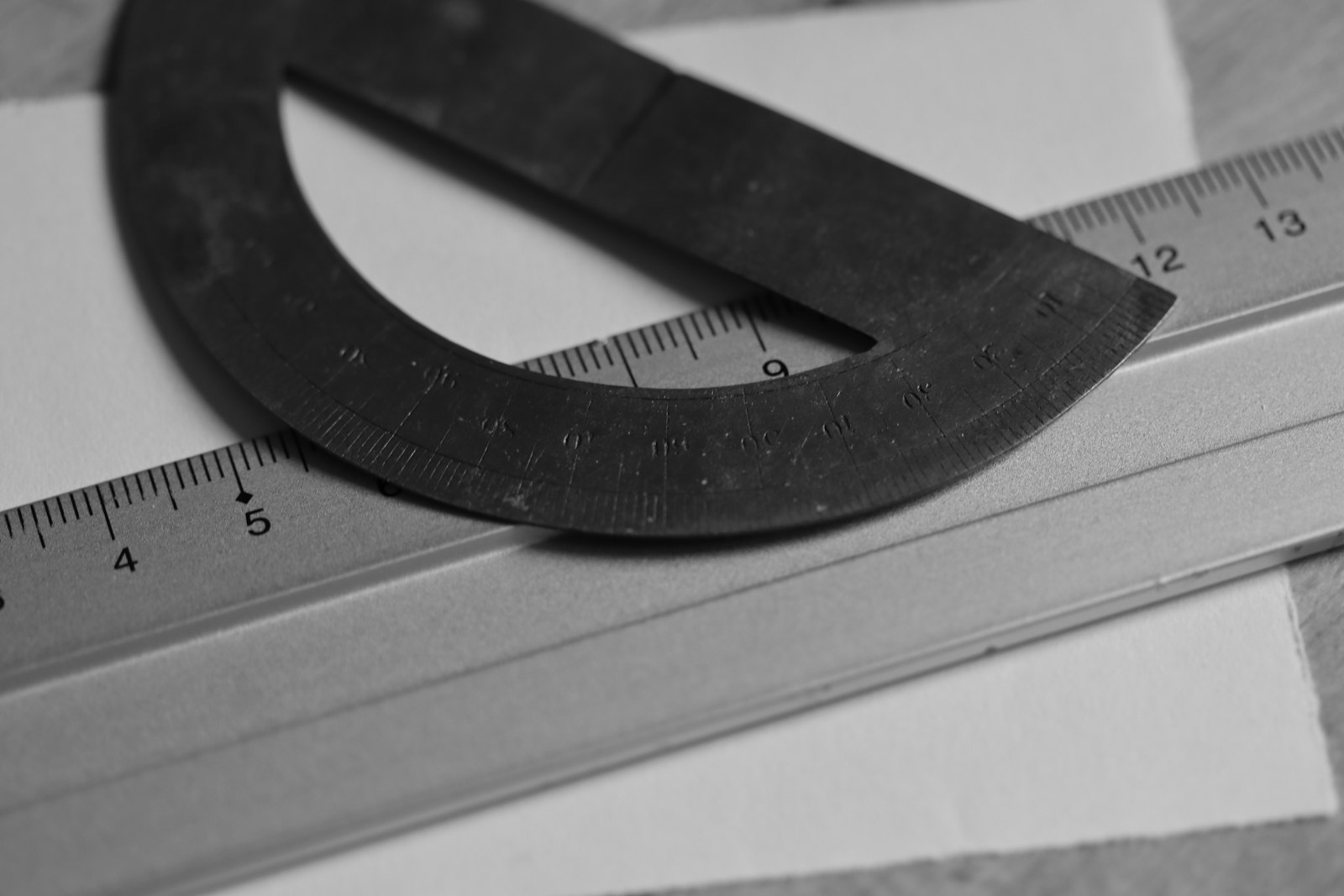
Find the height with a set square or a book corner
Stand the corner of a book on the base and slide it up until it touches the top point of the triangle. The edge it travels along is the height. Practise on a tall thin triangle and a flat wide one, so the height is not always the side that looks upright.
Write the formula in three lines
Write "base = 8", "height = 5", then "8 × 5 ÷ 2 = 20 square units". Keeping the multiplication and the halving on separate steps stops the common slip of multiplying the two numbers and stopping.
Ask which side is not needed
Give a triangle with all three side lengths marked and ask which one the formula does not use. On a non-right triangle, the slanted sides are usually extra information, and spotting that is half the skill.
Where "half of base times height" comes from
A rectangle with base 8 and height 5 has an area of 8 × 5 = 40. A diagonal splits it into two identical right triangles, so each has an area of 40 ÷ 2 = 20. That is the whole formula for a right triangle: its two short sides are the base and the height.
Other triangles work the same way. Any triangle can be doubled by turning a copy upside down and joining the two to make a parallelogram, whose area is base × height. The triangle is half of that. A child who sees the doubling can rebuild the formula in the exam without having memorised it.
A worked example: the height is not a side
A triangle has a base of 10 cm, a height of 4 cm, and slanted sides of 5 cm and 6 cm. The area is 10 × 4 ÷ 2 = 20 cm². The 5 and the 6 are not used, because neither is at a right angle to the base.
The most common wrong answer here is 10 × 6 ÷ 2 = 30 cm², which uses a slanted side as if it were the height. A good check is to ask: "is this measurement straight up from the base, at a right angle?" If not, it is a distractor.
A worked example: working backwards from the area
A triangle has an area of 24 cm² and a base of 8 cm. What is its height? Start from 8 × height ÷ 2 = 24. Undo the halving by doubling, to get 8 × height = 48, then divide by 8 to find that the height is 6 cm.
Children who understand the formula as "half of a rectangle" often find this easier: the matching rectangle has an area of 48, and a rectangle with a base of 8 and an area of 48 has a height of 6.
A worked example: the obtuse triangle
In a triangle with one wide, blunt corner, the height can fall outside the triangle. If the base is 7 cm and the dotted height line drawn from the top point to the extended base is 3 cm, the area is 7 × 3 ÷ 2 = 10.5 cm². The height is still measured at a right angle to the base, even though the line lands beyond the end of it.
This catches children out because every earlier triangle had its height inside. Drawing the base longer with a dotted line, then dropping the height onto it, is the habit that handles it.
Signs it’s time for outside help
When home help has done what it can
- Multiplies base by a slanted side and calls it the height.
- Gives base × height as the answer and forgets to halve it.
- Cannot say which side is the height when the triangle is turned on its side.
- Is stuck as soon as the height falls outside the triangle.
- Cannot find a missing base or height when the area is given.
- Writes the answer in cm instead of cm².
Questions parents ask
FAQ
What grade do children learn the area of a triangle?
In the US Common Core, finding the area of triangles by composing them into rectangles is in Grade 6 geometry (ages 11–12). The Australian Curriculum covers it in the middle years of primary and early secondary school.
Why do we divide by 2?
Two copies of any triangle fit together to make a parallelogram with the same base and height, and the parallelogram’s area is base × height. One triangle is half of that.
Can any side be the base?
Yes. Pick any side as the base, then use the height measured at a right angle to that side. Both choices give the same area, which is a useful way to check an answer.
What if I only know the three side lengths?
Then there is no height to read off, and a different method is needed. That is beyond what most children are asked in this topic, and most school questions give the height.
Further reading
Classes that fit
Live, 50–60 minutes, four learners at most or 1-on-1.
Not sure which is right for your child?
Tell us their age and what they have tried so far, and we will suggest where to start before you book anything.