
Parent guide · 5 min read
Place value for kids: why the same digit can mean very different amounts
Place value is the idea that a digit means different amounts depending on where it sits: the 4 in 4,000 is worth a thousand times the 4 in 4. Almost every later topic leans on it, from long multiplication to decimals. When it is shaky, children copy the steps of a method but cannot tell when an answer looks wrong.
Try this tonight
5 things you can do at home
Build numbers with something you can hold
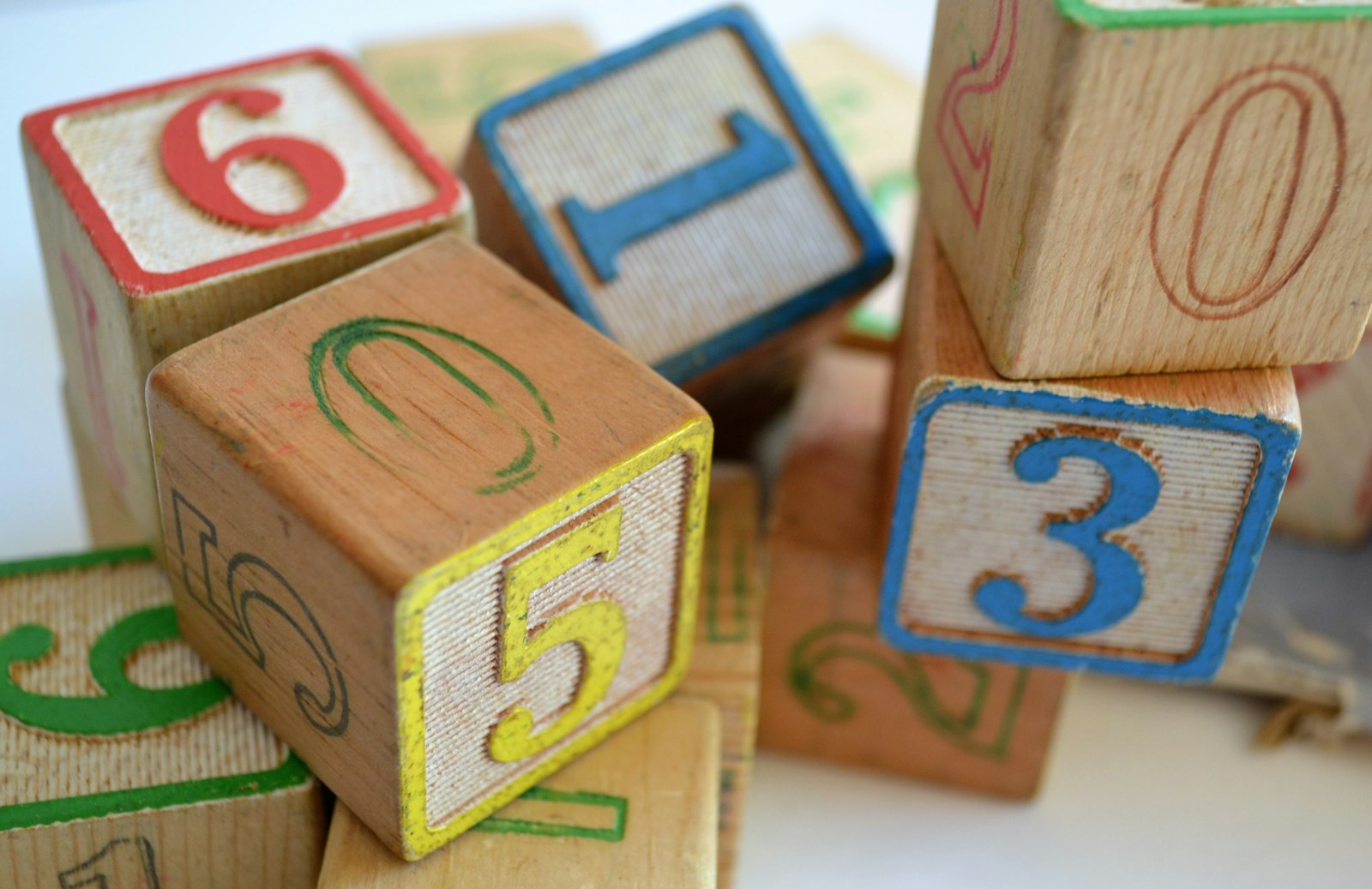
Use single beans or coins for ones, bundles of ten for tens, and a bag of ten bundles for a hundred. Ask your child to show 243 and then 234. Seeing that the same three digits give two different piles makes position matter.
Draw a place-value chart on paper
Rule columns labelled Thousands, Hundreds, Tens, Ones and write one digit per column. Say the number out loud while pointing: "four thousand, three hundred, no tens, five ones". Keep the chart beside the homework until they stop needing it.
Practise expanded form both ways
Ask for 6,072 written as 6,000 + 70 + 2, then the other way: 800 + 5 is 805, not 85. Mixing up numbers like 805 and 85 is the quickest way to see whether zero as a placeholder has landed.
Play "ten times bigger"
Pick a number such as 36 and ask what is ten times bigger (360) and ten times smaller (3.6). Each answer moves every digit one place; the digits stay the same and the places change. Do three or four in a row.
Read decimals with a money or ruler anchor
Compare 3.47 to $3.47 or to 3 metres and 47 centimetres. Money helps because children already know the 4 is four dimes and the 7 is seven pennies, which are tenths and hundredths of a dollar.
Why position matters, and what zero is doing
Our number system is base ten: ten of any place make one of the next place up. Ten ones make a ten, ten tens make a hundred, ten hundreds make a thousand. A digit only says how many of that place there are. That is why 5 can mean five, fifty or five thousand.
Zero is a placeholder. In 4,035 the 0 says there are no hundreds, and without it the digits would slide together into 435. Children who treat zero as "nothing, so skip it" write 4,035 as 435 or 40035 when they hear "four thousand and thirty-five".
Worked example: reading and comparing numbers
Write 4,305 in expanded form. Thousands: 4 → 4,000. Hundreds: 3 → 300. Tens: 0 → 0. Ones: 5 → 5. So 4,305 = 4,000 + 300 + 0 + 5. Compare it with 4,035 (4,000 + 0 + 30 + 5): the digits are the same but 4,305 is larger because it has 3 hundreds and 4,035 has none.
To compare any two whole numbers, look at the largest place first. 7,419 vs 7,490: both have 7 thousands and 4 hundreds, then 1 ten vs 9 tens, so 7,490 is larger. For decimals use the same rule: 0.6 vs 0.45. Tenths first: 6 tenths vs 4 tenths, so 0.6 is larger even though 45 looks like a bigger number than 6.
Decimals are the same system continued to the right
The decimal point does not start a new system. It marks where the ones place is, and the places to its right are tenths, hundredths and thousandths, each ten times smaller than the one before. In 3.47 there are 3 ones, 4 tenths and 7 hundredths: 3 + 0.4 + 0.07.
Seeing it this way explains why 0.5 × 10 = 5: every digit moves one place to the left, so the 5 goes from the tenths place to the ones place. It also explains why 0.30 and 0.3 are the same amount, since the extra zero is a placeholder with no value of its own.
Signs it’s time for outside help
When home help has done what it can
- Writes "four thousand and thirty-five" as 435 or 40035.
- Says 0.45 is bigger than 0.6 because 45 is bigger than 6.
- Cannot say what the 7 in 7,240 is worth.
- Lines up digits wrongly in column addition or subtraction.
- Multiplies or divides by 10 and 100 by "adding or removing zeros" without knowing why.
Questions parents ask
FAQ
What age do children learn place value?
The basics (tens and ones) start around ages 5–7. Hundreds and thousands come around ages 7–9, and decimal place values (tenths, hundredths) follow around ages 9–11, though the exact order varies by curriculum.
Why does my child struggle with zero in the middle of a number?
Zero in the middle (like 4,035) stands for an empty place. Children who think of numbers as a string of digits often drop it. A place-value chart with a column for every place makes the empty column visible.
What is the difference between place and value?
The place is where the digit sits (the hundreds place); the value is what the digit is worth there. In 4,305 the 3 is in the hundreds place and its value is 300.
Does place value really matter for later maths?
Yes. Column methods, long multiplication, rounding, decimals and scientific notation all depend on it, so gaps tend to show up again as errors in those topics.
Further reading
Classes that fit
Live, 50–60 minutes, four learners at most or 1-on-1.
Not sure which is right for your child?
Tell us their age and what they have tried so far, and we will suggest where to start before you book anything.