
Coding classes for kids ages 8–16
Children write real code here from the first class. Not drag-and-drop blocks that have to be unlearned later — Python, typed out, running. Beginners start with variables, loops and functions and leave with small working programs. From there the tracks split by interest: building playable games, training a first machine-learning model, creative animation in JavaScript with p5.js, or the long Python Mastery track for a child who has caught the bug.
Showing 5 of 5 classesAll subjects
What your child will be able to do
- Read an error message, work out what it means, and fix it — the skill that separates people who keep going from people who quit
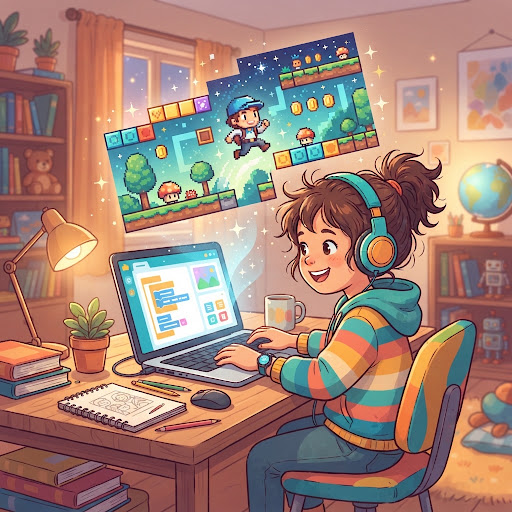
- Build a playable game with movement, collisions, scoring and levels
- Train a simple machine-learning model and explain, in their own words, why it makes the predictions it does
- Finish with a project that is theirs — designed by them, not copied from the board
What you need before the first class
- A computer or laptop. Coding on a phone is not workable and we will not pretend otherwise
- No prior experience for the beginner tracks — Python Beginner genuinely starts at zero
- Typing is easier if a child has done some before, but plenty start without it
Questions parents ask
- Scratch or real code?
- Real code, in Python or JavaScript. Block languages are a good on-ramp at younger ages, but a child who has been in school coding clubs has usually outgrown them and gets frustrated being handed blocks again.
- Is 8 too young to start Python?
- No, with the right pace. Python Beginner takes ages 8 to 16 because the material is introduced by ideas rather than by reading speed. A younger child covers less ground per class, which is what the small class size is for.
- Which track should we start with?
- Python Beginner unless your child has already written code. Game Design, AI and p5.js all assume the basics are in place. If you are not sure, ask us before booking rather than guessing.