
Robotics and Arduino classes for ages 9–16
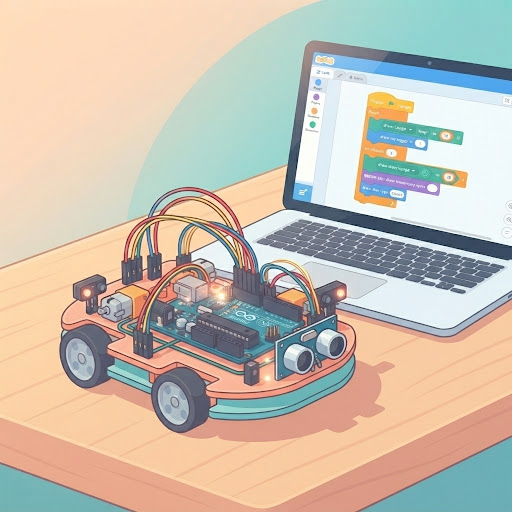
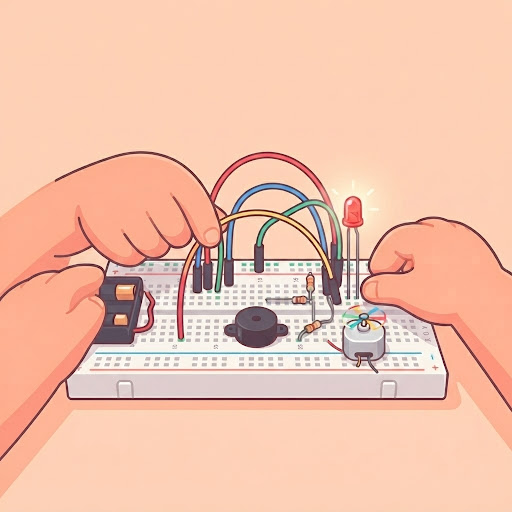
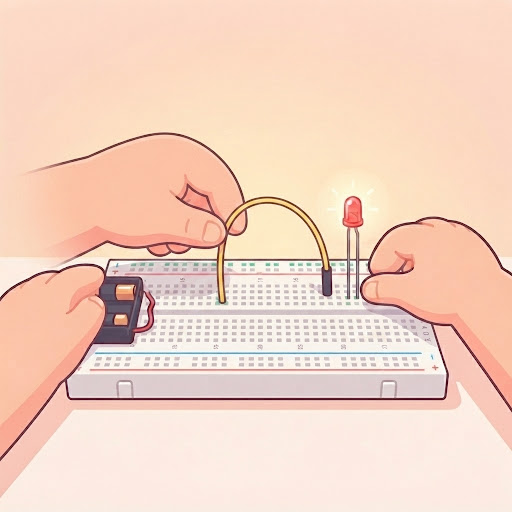
This is the one subject where the work leaves the screen. Children wire real circuits on a breadboard and write the code that drives them — lights, sensors, motors, then projects that combine all three. It runs in three age bands, each starting from where that age can actually begin, as an 8-class introduction or a 24-class full track.
Showing 3 of 3 classesAll subjects
What your child will be able to do
- Build a circuit from a diagram, and debug it when it does not work — which it will not, the first few times
- Write and upload code that makes physical hardware respond to the real world
- Read a sensor, interpret the value, and make something happen because of it
- Finish the full track with a project combining input, logic and movement
What you need before the first class
- An Arduino starter kit — board, breadboard, jumper wires, LEDs, resistors and basic sensors. We tell you exactly what to buy before the first class
- A computer or laptop with a USB port for the board
- An adult nearby for younger children. Low-voltage electronics are safe, but small components are easy to lose and easy to swallow
Questions parents ask
- Do we have to buy a kit?
- Yes. This subject cannot be taught without hardware, and we would rather say so plainly before you book than have a child watching someone else’s circuit. A standard beginner kit is enough — we send the exact list in advance.
- Why does this start at 9 and not 8?
- Fine motor control. Pushing components into a breadboard and keeping track of small wires is genuinely difficult below about nine, and a child who cannot physically build the circuit spends the class watching.
- Does my child need to code first?
- No. The introduction track teaches the code alongside the circuits. Children who have done Python find the first few classes easier, but it is not assumed.