
Parent guide · 6 min read
Probability help for kids: turning "likely" into an actual number
Before probability is ever written as a fraction, children already have a rough sense of "likely" and "unlikely" from everyday life. The subject gets harder exactly at the point where that instinct has to turn into an actual number — a fraction, decimal or percentage that means something specific rather than a vague feeling. This guide covers that translation step, with one worked example and the traps that catch children who understand the idea but not yet the mechanics.
Try this tonight
4 things you can do at home
Always write the fraction, even for an easy question
Even when the answer feels obvious, like "it will probably rain", have your child write it as a fraction: outcomes wanted over total outcomes. This builds the habit that makes harder questions, where the answer is not obvious, much easier to reach.
Count the total outcomes out loud, one at a time
The total, the bottom of the fraction, is where most mistakes happen, usually from missing or double-counting an outcome. Having your child count every possibility out loud, "1, 2, 3, 4, 5, 6 sides on the die", catches this before it becomes a wrong answer.
Ask what a probability of 0 and a probability of 1 would mean
A probability of 0 means something is impossible; a probability of 1 means it is certain. Checking an answer against these two ends, "can this really never happen, or always happen?", is a fast way to catch an answer that has gone badly wrong.
Separate "probability" from "what actually happened"
Flip a coin six times in a row and count the results together. A fair coin still might not land on heads exactly three times — that gap between the calculated probability and the real result is worth talking through directly, since it is where a lot of confusion starts.
Why "likely" is not the same as "calculated"
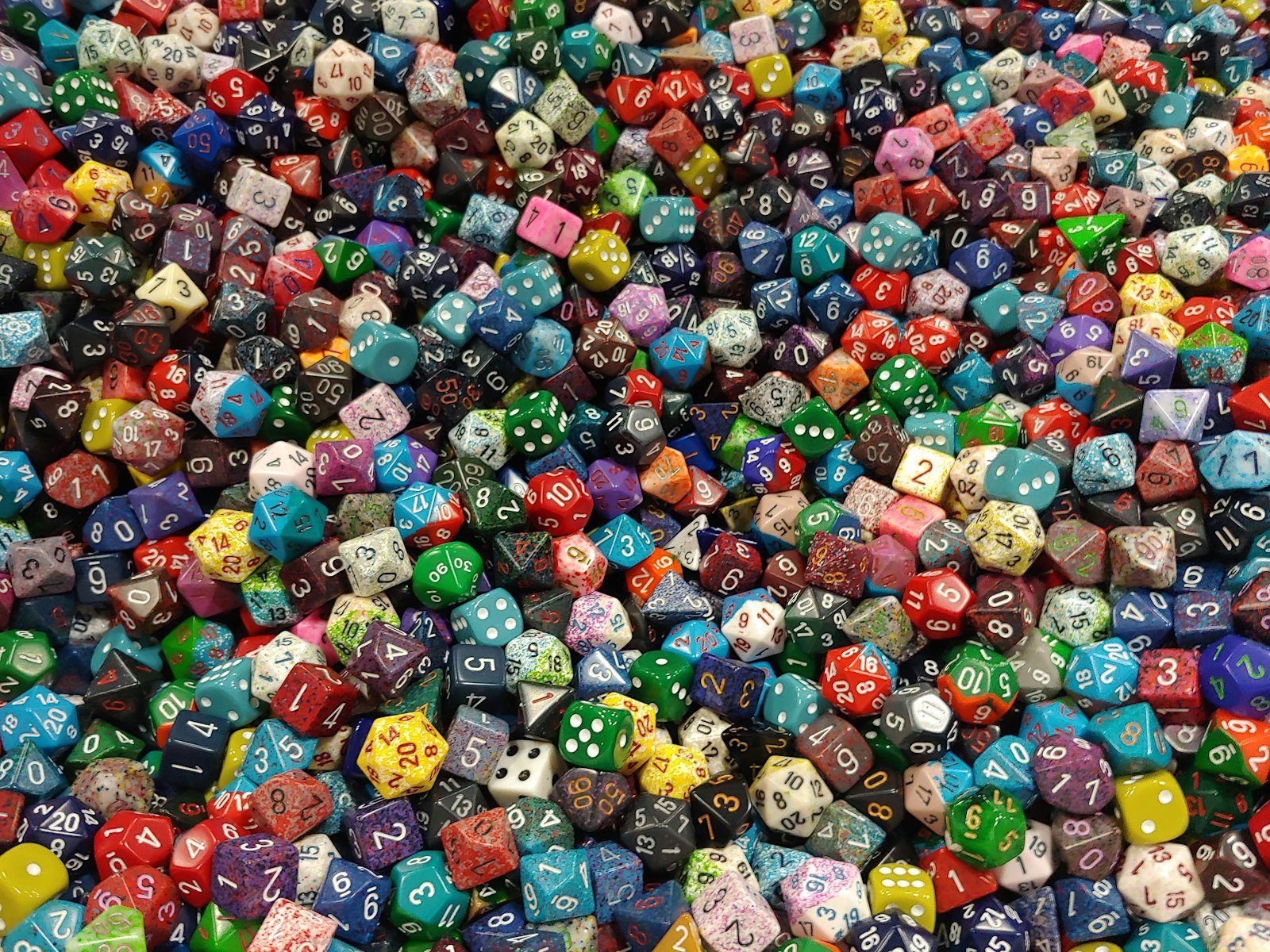
Children generally arrive at probability already understanding the everyday idea of chance, that some things are more likely than others. What is new is turning that feeling into a specific number: writing that the chance of rolling a 4 on a six-sided die is not just "unlikely-ish" but exactly 1/6. That translation, from a vague sense to an exact fraction, is the actual skill being taught, not the underlying idea of chance itself.
This is why a child can seem to understand probability in conversation and still get problems wrong on paper: the everyday intuition and the fraction-writing mechanics are two different skills, and only one of them is being tested on a worksheet.
A worked example: a bag of marbles
A bag holds 4 red marbles, 3 blue marbles and 1 green marble, 8 marbles in total. The probability of pulling a red marble is the number of red marbles over the total: 4/8, which simplifies to 1/2. The probability of pulling blue is 3/8. The probability of NOT pulling green is every outcome except green, so 7/8, or, more directly, 1 minus the probability of green (1/8), which also gives 7/8.
That last calculation, using 1 minus an event's probability to find the probability of it not happening, is a shortcut worth teaching directly rather than leaving a child to rediscover it, since re-counting every "not green" outcome by hand gets slow once the numbers grow.
The trap: coincidences, and "it's due"
A common misconception is the idea that a probability "evens out" quickly, that after several coin flips landing on heads, tails is somehow "due". It is not: each flip is independent, and the coin has no memory of previous flips, so the probability of heads on the next flip is still exactly 1/2 regardless of what came before. This idea feels intuitively true even to adults, which is exactly why it is worth naming directly rather than assuming it will not come up.
The reverse trap also happens: a coin landing on heads five times in a row can look "impossible" to a child, when in fact it is unlikely but not close to impossible — real random results are streakier than most people expect. A quick way to make this concrete is actually flipping a coin several times in a row and writing down the results honestly, streaks included.
Signs it’s time for outside help
When home help has done what it can
- Can explain what "50/50" means but cannot write a probability as a fraction.
- Miscounts the total number of outcomes, especially when some are grouped, like colours of marbles.
- Believes an event is "due" to happen after a run of the opposite result.
- Forgets to simplify a probability fraction, or treats 4/8 and 1/2 as different answers.
- Cannot find the probability of an event NOT happening without recounting every other outcome by hand.
Questions parents ask
FAQ
What age do children usually learn probability?
Basic probability, likely and unlikely and simple fractions like 1/6 for a die, is usually introduced around ages 10–11 (US Grades 5–6), with more formal calculations, including compound events, following around ages 12–13 (Grade 7).
Is probability the same as statistics?
They are related but different: probability predicts the chance of future outcomes from known information, like a fair die having a 1/6 chance of any face, while statistics analyses data that has already been collected. Many courses teach them together because each helps explain the other.
Why do we say a coin is "50/50" if the actual result can still be uneven?
The 50/50 figure describes the probability of a single flip, not a fixed rule for any particular set of flips. Over a very large number of flips the results do tend to even out, but any short run, including one that looks lopsided, is completely consistent with a fair coin.
What is the fastest way to check a probability answer is at least reasonable?
Check that it lands between 0, impossible, and 1, certain, and sanity-check the direction: an event that feels more likely should have a bigger fraction than one that feels less likely. This will not catch every mistake, but it catches most answers that have gone badly wrong.
Classes that fit
Live, 60 minutes, four learners at most or 1-on-1.
Not sure which is right for your child?
Tell us their age and what they have tried so far, and we will suggest where to start before you book anything.